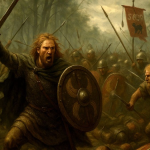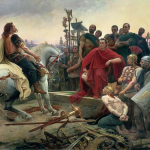
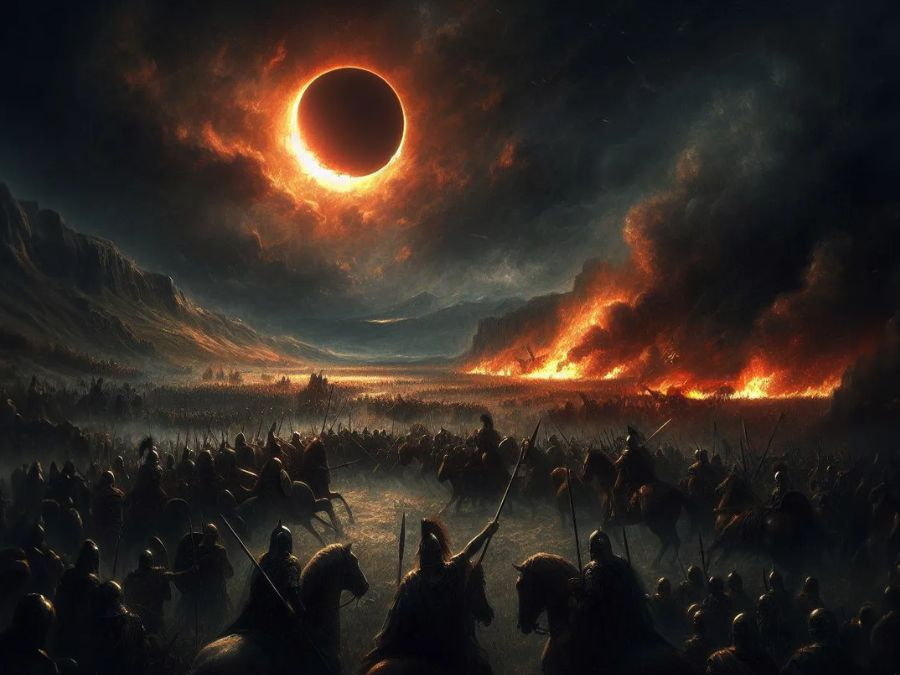
One moment changed a war: on May 28, 585 BC, daylight fell away and two armies simply stopped. The Medes and the Lydians had been fighting for about fifteen years, and their battle beside the Halys River ended when the sky went dark. Later writers said Thales of Miletus had warned people an eclipse might come, and that tiny cosmic timing turned a fight into a story, 28th May 585 BCE: Eclipse of Thales ends the Battle of Halys between the Medes and Lydia.
Soldiers who were moments ago ready to kill froze and looked up. Herodotus sketches that stunned silence as a switch from fury to fear to awe. Pride and weapons gave way to a shared human shock: one minute armies, the next minute witnesses. That sudden pause opened a space for negotiation and changed how both sides thought about fate, power, and whether the gods were watching.
28th May 585 BCE: Eclipse of Thales ends the Battle of Halys between the Medes and Lydia
Modern readers and viewers react like those ancient soldiers in their own way: surprised, curious, and a bit skeptical. Comments on the videos and articles run from simple awe to questions about how Thales could have known. One viewer calls it a “divine timeout” while another wonders if historians have added drama over time.
The silence at Halys did not end with astonishment; it turned into bargaining and a new political map. The leaders arranged a marriage between Alyattes’s daughter Aryenis and Cyaxares’s son Astyages and the Halys River became the agreed border. That shift from battlefield to treaty shows how a sudden, shared moment, fear and wonder together can become a foundation for permanent peace.
When an Eclipse Ended a War – The Battle of Halys
When historians and science writers retell the episode, they highlight one sharp moment: modern astronomy can now calculate an eclipse path and point to May 28, 585 BC as the best fit. That scene where day becomes night is the standout. Some scholars still debate details but the mix of precise sky math and messy human choice is what fascinates viewers and scholars alike.
What this really means is simple: a natural event made people stop, think and choose peace. The story remains powerful because it shows leaders who could have kept fighting instead choosing to listen to what felt like a sign. If a single shadow could pause an army than a single clear choice can rewrite a history we think is fixed.